
One pool. Many productions.
Bring software-based processing onto shared infrastructure. Allocate capacity across shows and teams, with orchestration coordinating applications, media connections and available resources.
Every great build starts on paper. We develop the system designs, signal flow diagrams, rack elevations, cable schedules and bills of materials around your facility and workflow.
Then we bring them to life: fabrication, installation, configuration, testing, documentation and operator training.
Discuss an integration
Design the facility around what your teams need to do. A software-defined approach lets production functions draw from shared compute, with spaces and workflows that can be reconfigured as the work changes.
Bring software-based processing onto shared infrastructure. Allocate capacity across shows and teams, with orchestration coordinating applications, media connections and available resources.
Combine local compute, remote resources and cloud services around latency, connectivity, resilience and operating cost. Build a practical path from the systems you have today.
Reconfigure operator controls and software workflows for different productions. Let the same space support different shows and teams without rebuilding its technology for every use.
Requirements, signal flow, rack layouts and an agreed equipment scope.
Fabrication, configuration and testing of the connected workflow.
Documentation, training and a defined route for ongoing support.
The infrastructure behind the experience
Connect the technology. Free the creativity.
Explore the systems that bring your production to life.
Thoughtful engineering.
Every connection, considered.

From fiber infrastructure to ST 2110 media networks, we design the transport, timing and monitoring that keep your production connected.
Explore systems integration ↗Start with the requirements, the existing infrastructure and a scope that makes sense.
Explore ConsultingComplete system designs for baseband, 4K HDR and IP workflows. Know what you are building and why before a cable is pulled.
Racks fabricated, cabling terminated and labeled, equipment configured, and systems commissioned as a connected whole.
A planned transition across network, timing, media transport and control, with hybrid operation where the workflow calls for it.
Explore IP & ST 2110 MigrationFlexible engagements from procurement and staging to commissioning, training and ongoing engineering. We can also augment your in-house team.
Explore Custom Packages & Support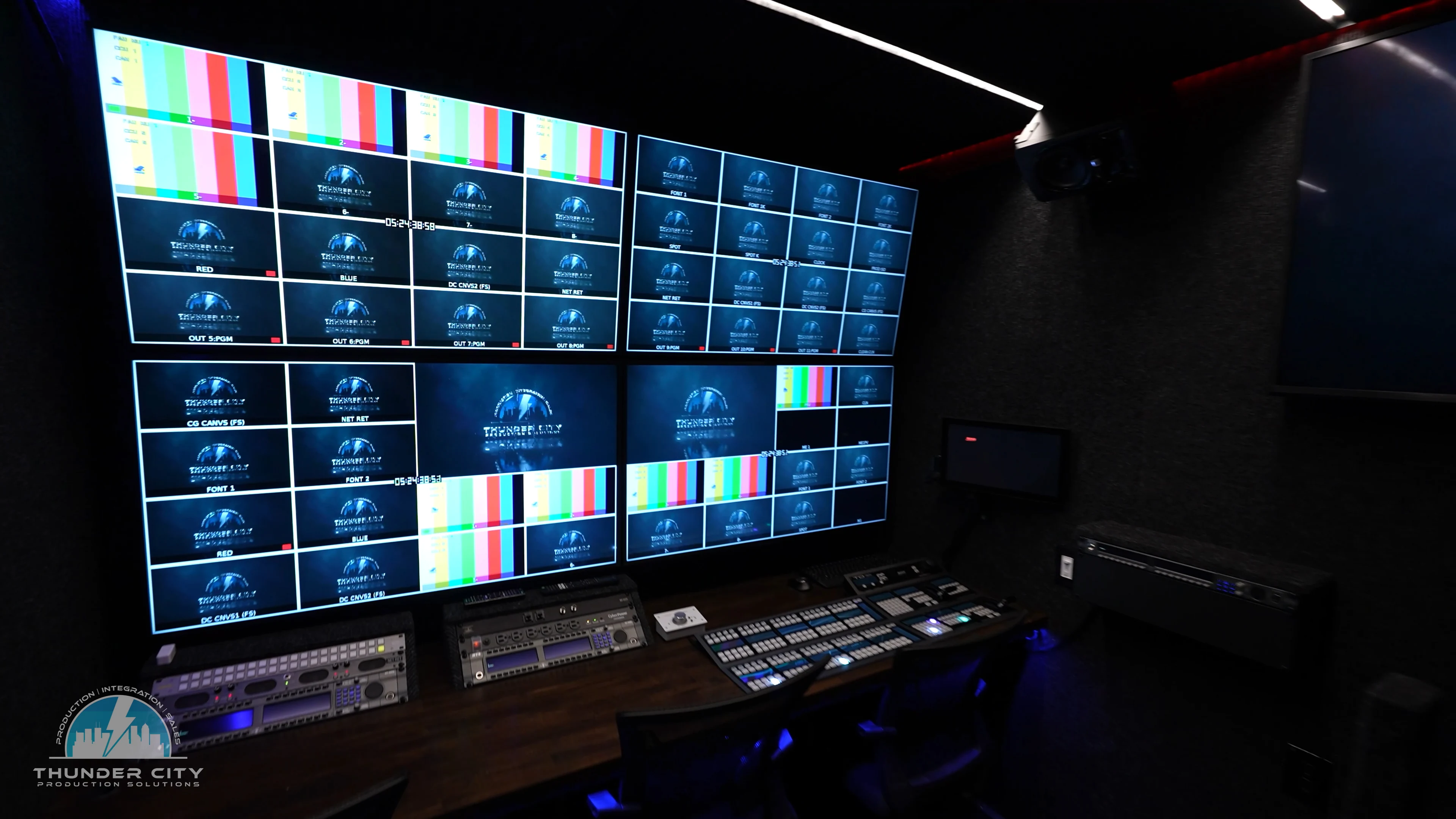
A realistic path forward, shaped around your requirements, priorities and budget.
Open communication and shared decisions. You stay part of the process.
A system and a delivery process designed around the way your team works.
Tested systems, clear documentation and operator training at handoff.
Service, spares, upgrades and ongoing access to the engineers who know your system.
Inside the build
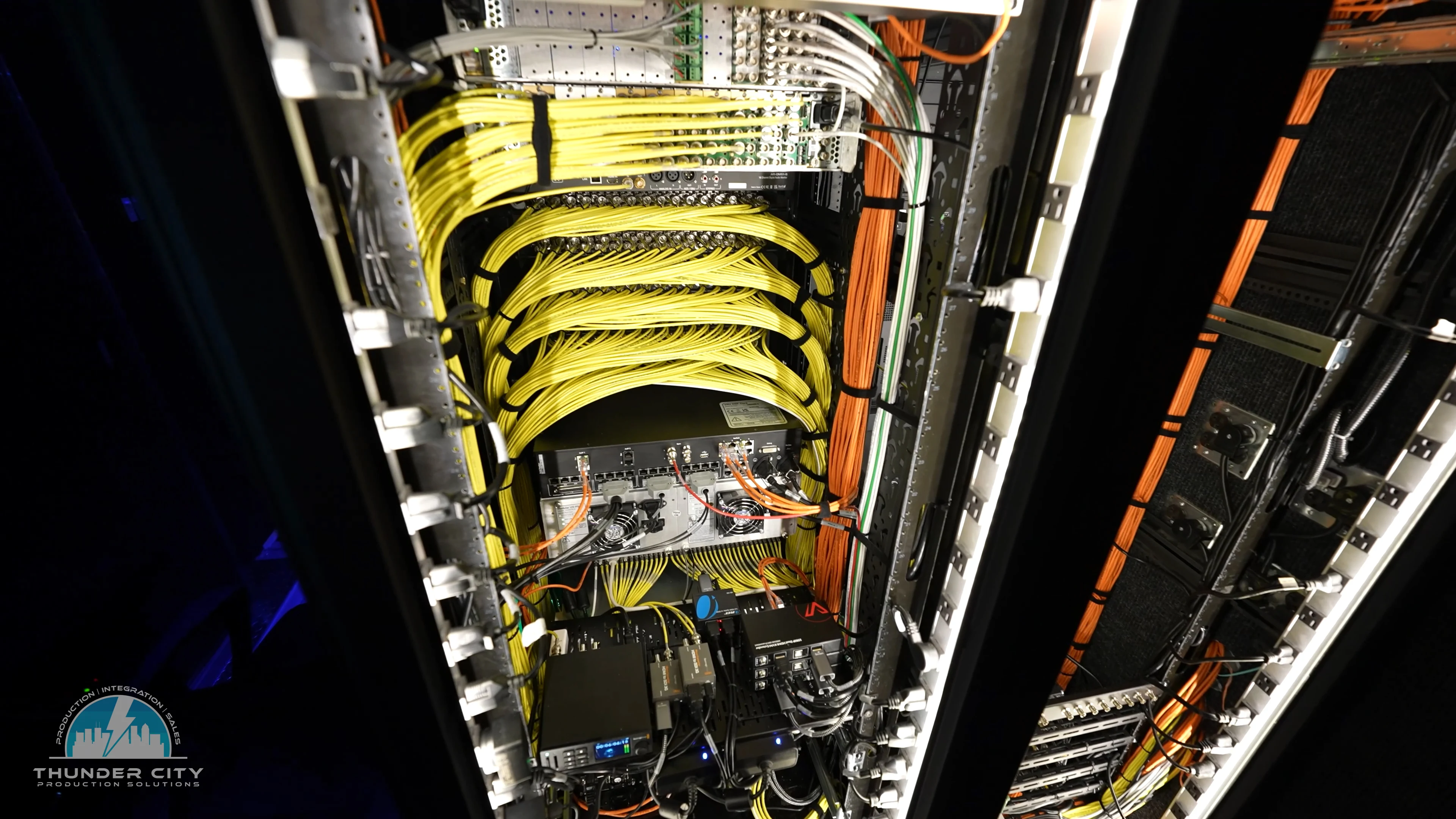
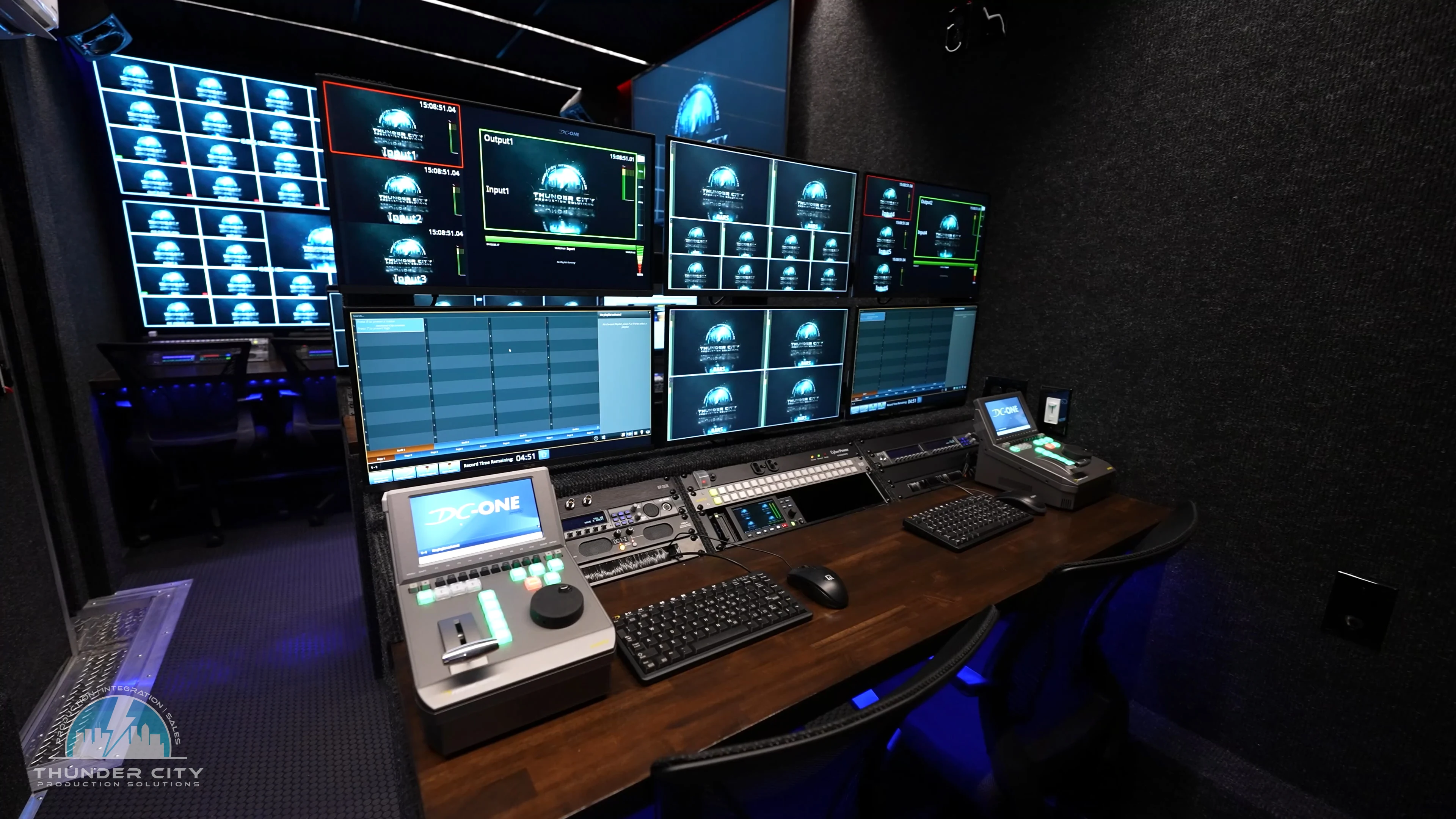
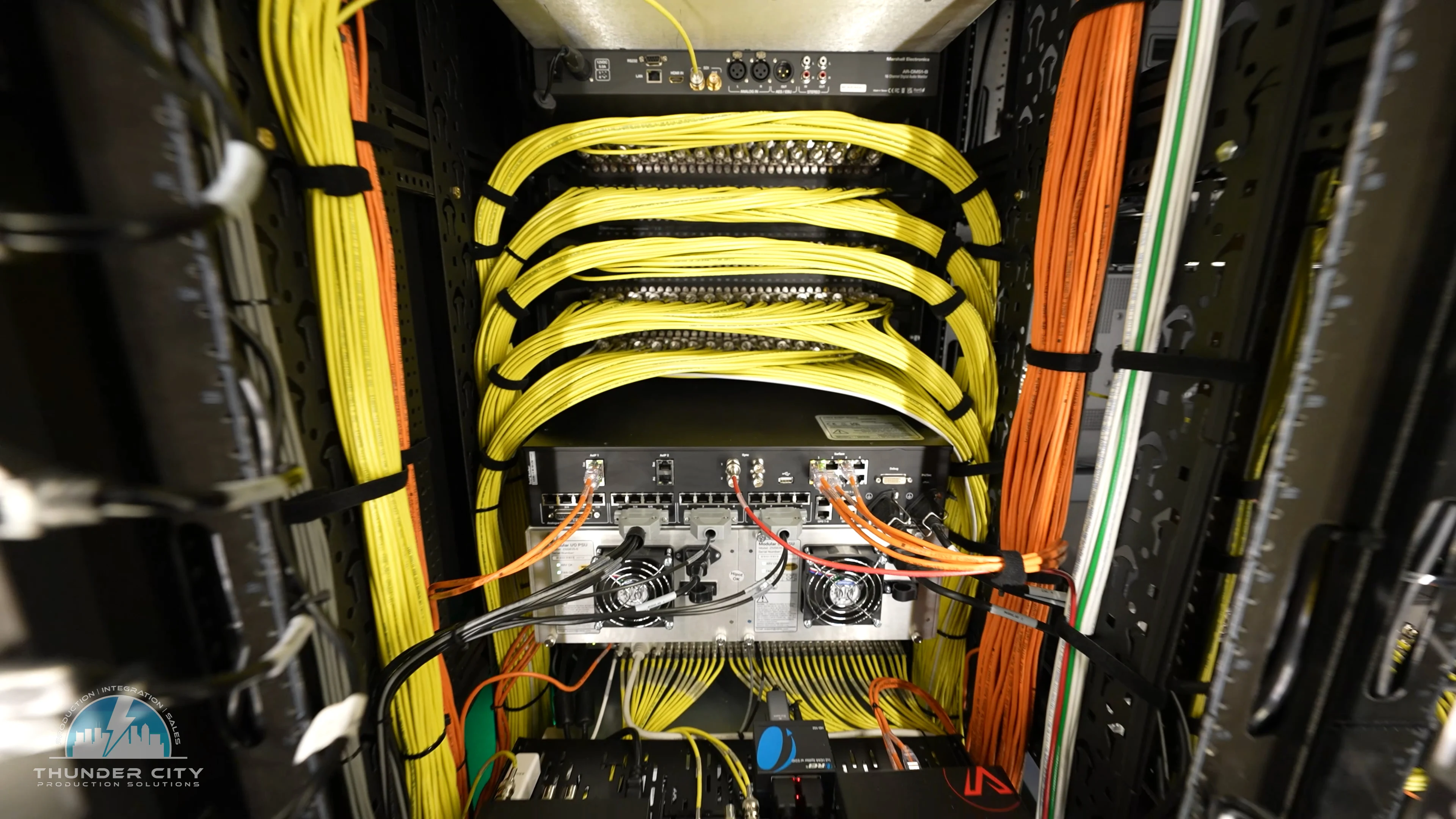
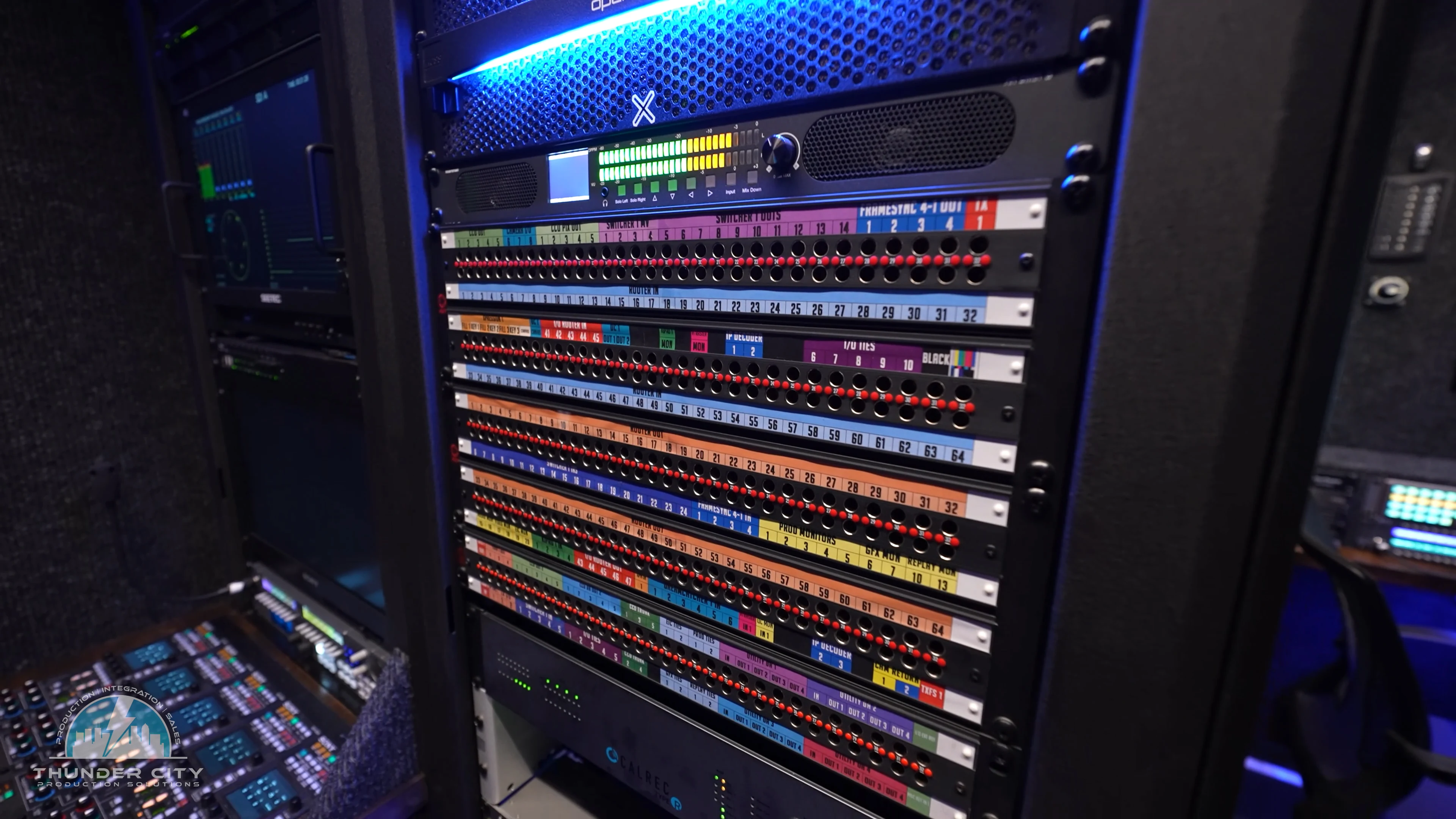
Real details from a TCP BOLT 32 build: accessible infrastructure, identified signal paths and an organized rack layout.
A closer look
A finished rack is only one part of an integration. The real test is whether the complete workflow behaves as expected, the operators understand it and the next engineer can trace it.
Map video, audio, communications, timing, control and monitoring as connected systems. Define formats, connection points and ownership at the boundaries with existing equipment, venue networks and outside feeds. Rack layouts, power and cooling requirements need to support maintenance as well as installation.
Separate work that can be built and checked in advance from work that requires access to an operating facility. Coordinate the installation around production commitments and identify temporary connections, dependencies and a fallback approach before a critical cutover.
Agree a test plan around actual use: selecting sources, viewing the right multiviewer layouts, communicating between positions, recording and handing off the required outputs. Where redundancy is included, define how the relevant failure scenarios will be demonstrated and recovered from.
Project documentation can include final signal flow, cable identification, rack layouts and configuration information, according to the agreed scope. Walk through the system with the people who will operate and maintain it. Establish how changes, troubleshooting and future expansion will be handled.
Before we begin
Get a clearer picture of the engagement before you commit to a direction.
That is a planning requirement to discuss early. A phased approach may allow some work to happen alongside normal operation, but access, temporary infrastructure and downtime depend on the particular system.
No. Baseband, IP and hybrid systems each have a place. The decision should follow scale, flexibility, interoperability, operating requirements and budget, rather than the name of a technology.
Define responsibilities for network services, addressing, access, monitoring and change control during design. Production requirements and IT policies need to be understood together before configuration and commissioning.
Share the facility, existing infrastructure, scope and target handoff date.
