A media network connects more than devices. It brings transport, timing, control and visibility together around a live workflow. Start with the productions it needs to carry and the people who will operate it.
Inside the build
Follow the physical connections.
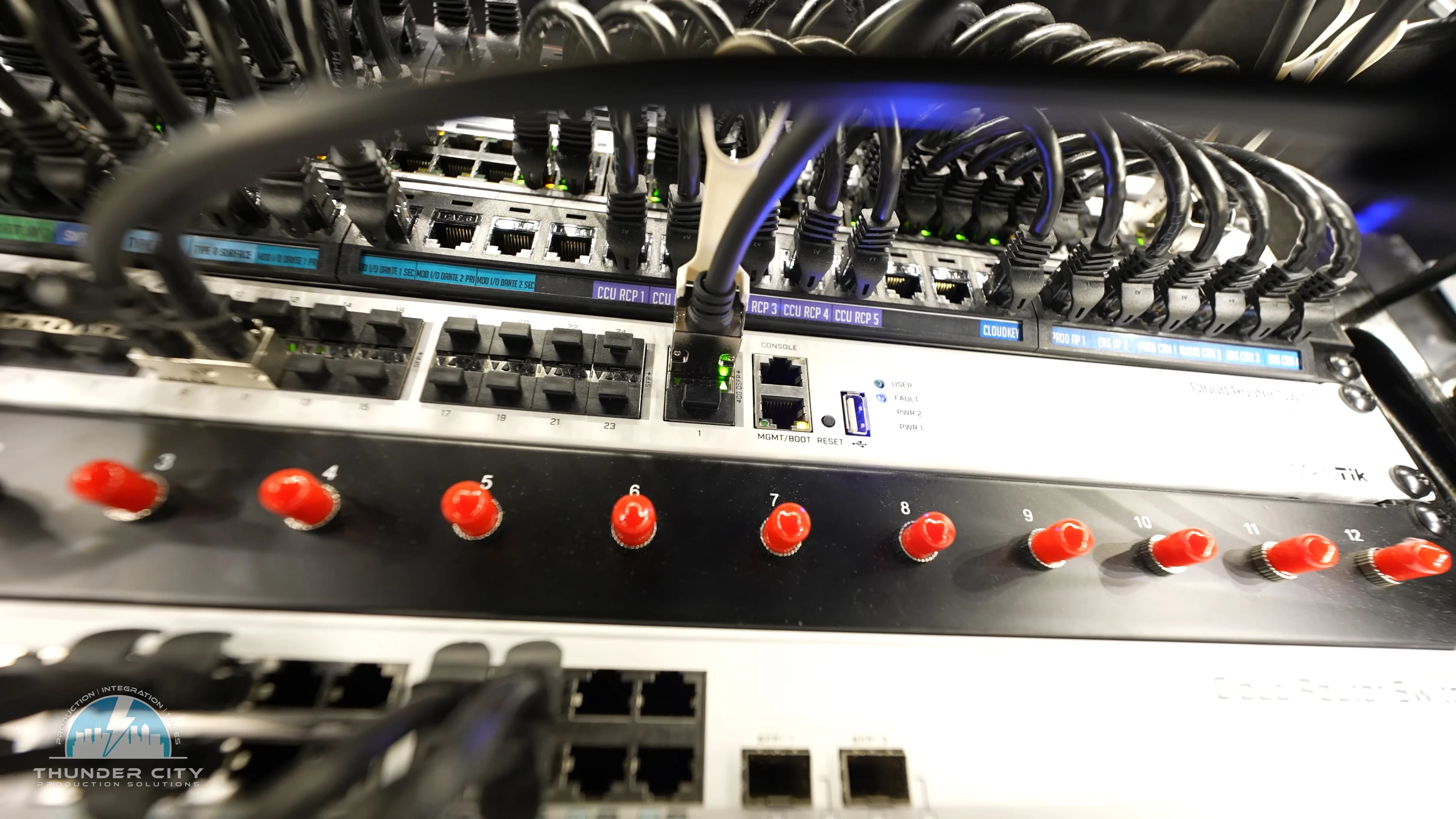
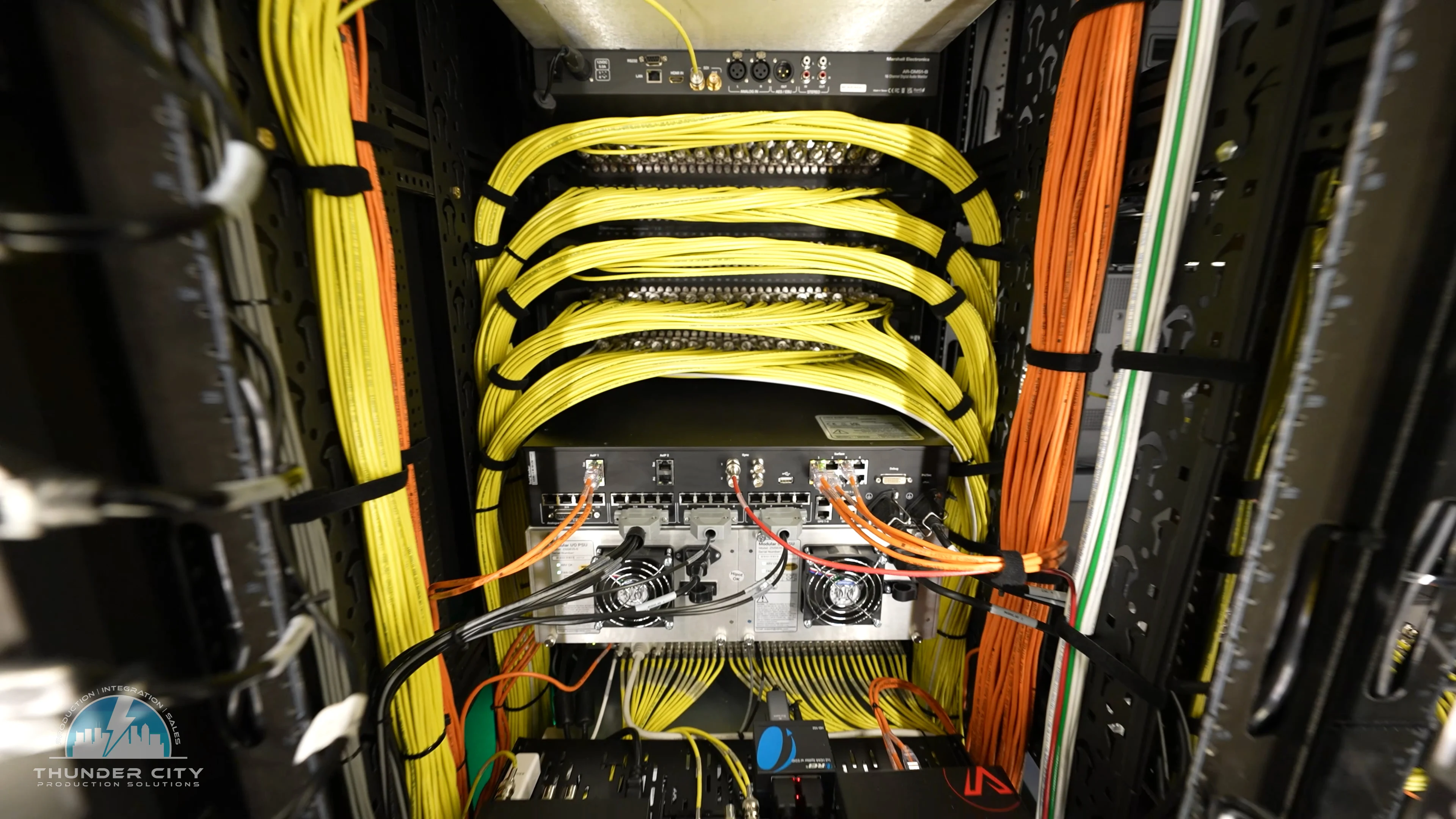
Rack connectivity and cable organization inside TCP’s BOLT 32 production environment.
Network patching and device connectionsEquipment interfaces and cable routing
Planning the system
What to consider.
Use these questions to shape the scope, compare approaches and prepare a useful conversation with the project team.
Begin with the signals and the schedule
List the sources, destinations, formats and simultaneous productions. Identify which devices are staying, which are changing and where baseband interfaces remain necessary. That picture helps define the scale of the network and the scope of a practical transition.
Transport, timing and control are different jobs
SMPTE ST 2110 separates video, audio and ancillary data into related flows over a managed IP network. Network design carries those flows; timing keeps the system synchronized; control determines how operators connect the resources they need. None of those layers should be treated as an afterthought.
Make resilience an explicit requirement
Identify what a production must keep doing if a connection or component fails. Discuss separate paths, timing dependencies, power and the behavior expected at the receiving equipment. Redundancy only has meaning when the design, device support and verification plan address the same failure scenarios.
Build a transition around the installed system
A facility does not need to abandon useful equipment to begin planning an IP architecture. Gateways and defined baseband boundaries can connect existing production functions to a new transport layer. Document which parts change in each phase and which temporary arrangements will be removed later.
Give operators and engineers the right view
Operators need clear source names, predictable controls and useful monitoring. Engineers need visibility into the transport and timing that support those actions. Agree responsibility for configuration, access and changes with the IT team, and include troubleshooting workflows in the handoff.
Prove the complete path
Use agreed production scenarios to verify source selection, audio relationships, monitoring, recording and output delivery. Where protection is designed in, include the relevant interruption and recovery checks. Record the operating configuration and the remaining actions before accepting the system.